
 Whatsapp For Training Query Only
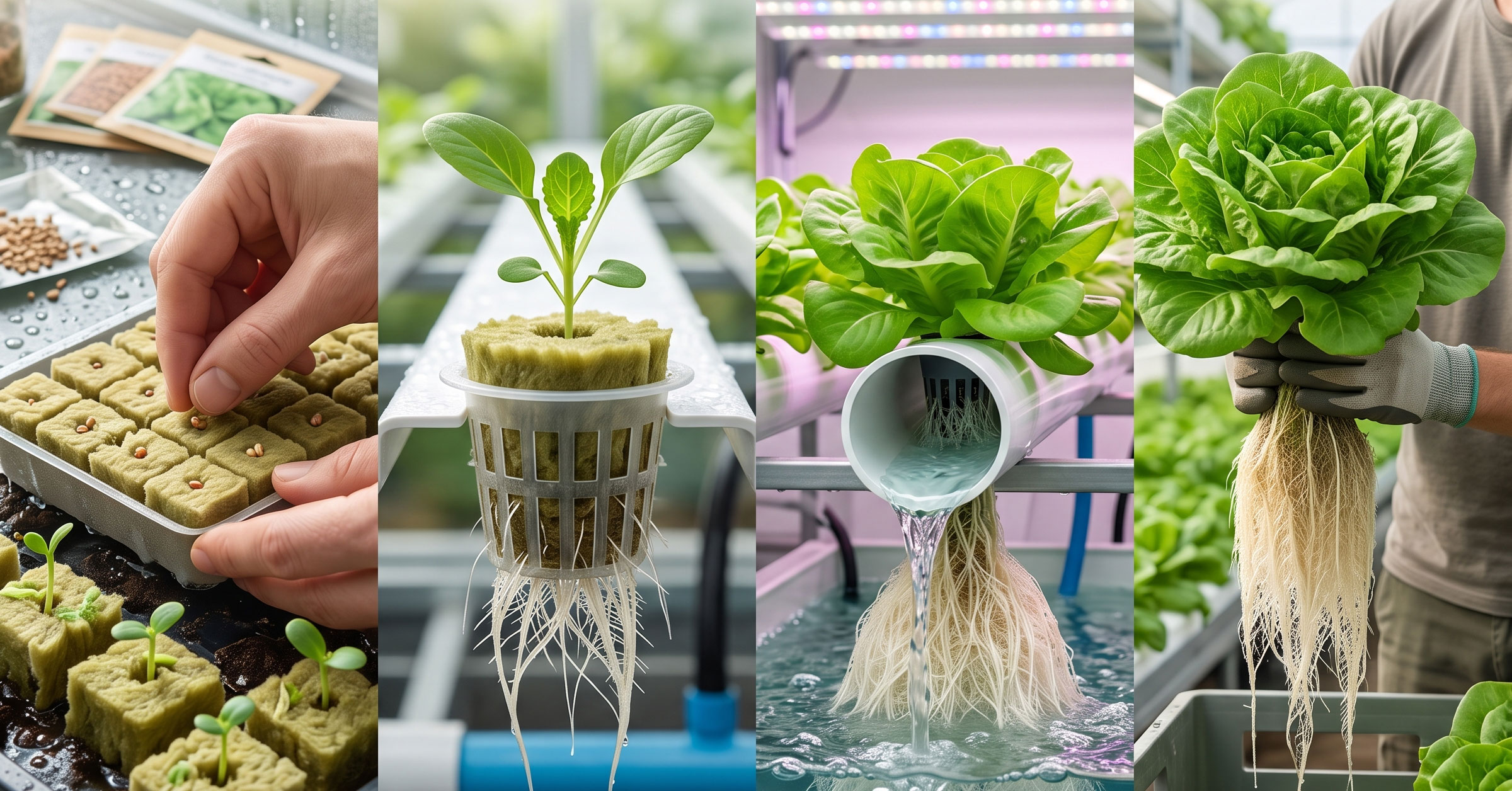
Every plant grown in soil follows a familiar story: a seed, a sprout, a harvest. Hydroponics follows the same story, but without soil. Instead, the roots receive water enriched with dissolved mineral nutrients, delivered in exactly the amounts the plant needs. The result is faster growth, less water use and cleaner produce, whether you are growing on a balcony in Gurgaon or running a commercial farm in Jaipur.
Since 2012, Ponic Greens has helped home growers, farmers and businesses across India set up hydroponic and aquaponic systems. This guide walks you through the full life of a hydroponic plant, from the day you sow the seed to the day you harvest, and explains what each stage asks of you.
Why Understanding the Journey Matters
In soil, the earth acts as a buffer. It holds water, stores nutrients and forgives small mistakes. In a hydroponic system there is no such cushion, which is exactly why plants grow so quickly: everything they need is delivered straight to the roots. It also means that pH, nutrient strength, light and temperature need regular attention. Growers who understand what each stage requires get consistent, healthy harvests. Those who don't often face yellow leaves, slow growth or root problems.
The good news is that the routine is simple once you know it.
Step 1: Choose the Right System and Crop
The journey begins before the seed is sown. The system you choose should match your space, budget and the crops you want to grow.
The Nutrient Film Technique (NFT) passes a thin stream of nutrient solution through channels so that the roots can absorb water and food while still getting plenty of oxygen. It is the most popular choice for lettuce, spinach, basil and mint, and our Urban NFT systems are built for exactly this kind of leafy crop.
Vertical systems stack plants upward instead of outward, which makes them ideal for apartments, terraces and any place where floor space is limited. You can explore the range on our vertical systems page.
Dutch Bucket systems give each plant its own container and are suited to larger, heavier crops such as tomatoes, cucumbers and capsicum. See our Dutch Bucket systems for options.
If you are new to hydroponics, start with leafy greens. They grow quickly and forgive small errors, and you will see real results within a few weeks.
Step 2: Germination
Germination is when the seed wakes up, absorbs water and sends out its first root. Seeds need three things at this stage: moisture, warmth and air. They do not need nutrients yet, because the seed carries its own food supply.
In hydroponics, seeds are usually started in a clean, soilless growing medium and moved into the system later. Popular options include coco peat, which holds moisture well; clay pellets (LECA), which are reusable and well aerated; and perlite or vermiculite, which balance air and moisture.
Keep the medium damp but never soaking wet, since waterlogged seeds can rot before they sprout. Most leafy greens germinate within a few days, though the exact time depends on the crop and the temperature.
Step 3: The Seedling Stage
Once the first true leaves appear, the plant is ready for its first light feed. Seedlings have delicate roots, so use a diluted nutrient solution rather than full strength. Too much too early is one of the most common beginner mistakes.
Light matters a great deal here. Seedlings that do not get enough light grow tall, thin and weak. If your space gets limited sunlight, grow lights can fill the gap, typically running 14 to 16 hours a day for leafy crops. Gentle airflow also helps, because it strengthens stems and reduces the risk of fungal problems.
Step 4: Transplanting into the System
When the seedlings have developed a healthy root system and sturdy leaves, they are ready to move into the main system, usually in net pots. Handle them carefully and avoid tearing the roots. Position them so that the roots can reach the nutrient solution or film, while the base of the stem stays above the water line to prevent rot.
Step 5: Vegetative Growth
This is where hydroponics shows its strength. With nutrients available at the roots all the time, the plant puts its energy into growing leaves and stems instead of searching for food.
Three measurements deserve your regular attention.
pH tells you how acidic or alkaline your solution is. Most leafy greens do best in a slightly acidic range, commonly between 5.5 and 6.5. Outside that range, plants cannot absorb nutrients properly, even if those nutrients are present in the water.
EC (electrical conductivity) measures the strength of your nutrient solution. Each crop has a preferred range, so follow the guidance that comes with your nutrients and adjust as the plant grows.
Water temperature affects how much oxygen the roots receive. Cool, well-oxygenated water keeps roots healthy, while warm, stagnant water encourages root disease. This matters especially during the hot months in North India, so shade your reservoir and keep it covered.
Check these values regularly and make small corrections often. Gradual adjustments are far gentler on plants than sudden, large ones.
Step 6: Flowering and Fruiting (for Fruiting Crops)
Leafy greens skip this stage because we harvest them before they flower. Crops like tomatoes, cucumbers and strawberries, however, need to flower and set fruit. They usually need stronger support, a nutrient mix with more potassium, and sometimes help with pollination, especially in enclosed spaces. This is the stage where Dutch Bucket systems earn their place.
Step 7: Harvest
For leafy greens such as lettuce, harvest often arrives around four to six weeks after sowing, depending on the variety and growing conditions. Fruiting crops take longer, usually a few months.
A few habits improve the quality of what you pick. Harvest in the morning, when leaves are crisp and full of moisture. Use clean tools to avoid spreading disease. With herbs like basil and mint, cut above a leaf node and leave enough foliage so the plant keeps producing.
Because hydroponic plants grow without soil, they avoid many soil-borne pests and diseases, which is one reason growers can produce clean vegetables with fewer chemical inputs. If this is what draws you to hydroponics, read our article on why hydroponic vegetables are healthier and chemical-free.
Step 8: Clean and Restart
The journey does not end at harvest. Before the next cycle, flush the system, clean the channels and reservoir, and sanitise your equipment. This prevents algae and disease from carrying over to the next crop, and it keeps your system running well for years.
Common Mistakes to Avoid
Most hydroponic problems come from a handful of avoidable errors. Feeding seedlings full-strength nutrients too early is one. Ignoring pH until the leaves look unhealthy is another. Others include placing the system where it gets too little light or too much heat, skipping regular cleaning, and choosing a system that is too complicated for a first project. Start simple, learn the routine, and expand once you are comfortable.
From Your First Plant to a Full Farm
One of the best things about hydroponics is how well it scales. Many growers begin with a small home setup and gradually move to larger installations.
If you are just starting, our DIY kits are a practical way to learn. If you live in a city and are short on space, our guide to urban farming solutions for apartments and villas in Gurugram will help you plan. For those thinking bigger, you can learn how to build a hydroponic farm, and if you prefer to learn by doing, our hydroponic training programme offers hands-on guidance.
We also support growers in Chandigarh and Amritsar, as well as across Delhi NCR and Jaipur.
Frequently Asked Questions
How long does it take to grow a plant hydroponically?
Leafy greens like lettuce typically take around four to six weeks from seed to harvest. Fruiting crops such as tomatoes take several months.
Is hydroponic food safe to eat?
Yes. Hydroponic vegetables are grown in a controlled environment using measured nutrients. As with any farming method, quality depends on clean water, proper nutrients and good hygiene.
Can I grow hydroponic vegetables at home in India?
Yes. Balconies, terraces and rooftops all work well. The best crop depends on your local climate and the season, so our team can advise you based on where you live.
Does hydroponics really use less water?
Recirculating hydroponic systems generally use far less water than soil farming, because the water is reused instead of being lost as runoff or evaporation from open soil.
Which crops are best for beginners?
Lettuce, spinach, basil and mint are ideal. They grow fast, need little space and tolerate small mistakes.
Begin Your Own Seed-to-Harvest Journey
Growing your own food is more achievable than most people expect. With the right system and a few simple habits, you can harvest fresh greens within weeks. Whether you want a small setup at home or a full commercial farm, the Ponic Greens team is here to help you plan, install and grow.